
I love Disney Cruise Line. That does not mean I have to defend every decision it makes.
And this one deserves criticism.
This might seem like a relatively small thing to some, but I just feel like it’s too much part of a pattern and that DCL is making mistakes that even fiercely loyal fans are becoming increasingly concerned about.
Disney Cruise Line is changing Palo dining, and the part that bothers me most is not the disappearance of the prix-fixe dinner menu.
It is losing the ability to use the Platinum and Pearl Castaway Club benefit for Palo brunch.
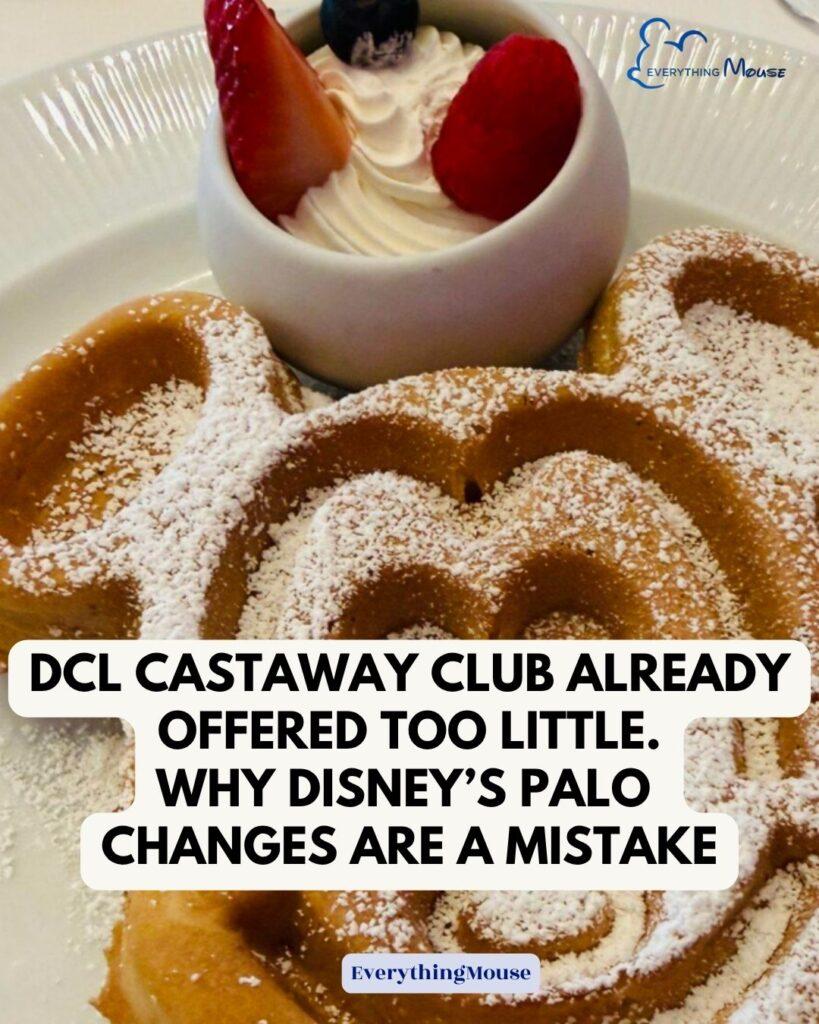
Eligible members will no longer be able to apply their $55 Palo credit toward brunch. ]The credit will be restricted to dinner.
And the irony is that getting a Palo brunch reservation can already feel almost impossible—even as a Pearl member.
In some ways, it would be easy to shrug and say it hardly matters. A benefit you struggle to book is not doing much for you anyway.
But that is not the point.
Disney is taking away a choice from its most loyal guests without offering anything additional in return.
In a loyalty program that already feels remarkably limited, that is unacceptable.
What Is Changing at Palo
Palo, Palo Steakhouse and Palo Trattoria will move to entirely à la carte dinner menus, removing the $55 prix-fixe option.
The changes take effect on sailings beginning:
| Date | Ships |
|---|---|
| October 22, 2026 | Disney Wonder |
| October 23, 2026 | Disney Fantasy, Disney Dream and Disney Wish |
| October 24, 2026 | Disney Magic, Disney Treasure and Disney Destiny |
| October 26, 2026 | Disney Adventure |
Platinum and Pearl members will retain their $55-per-person Palo credit for dinner. Guests remain responsible for beverages, gratuities and any spending above that amount.
I am sailing very shortly after these dates. So I have a decision to make.
Brunch itself is not disappearing.
It will remain $55 per person—but Platinum and Pearl members will no longer be able to use their loyalty credit to cover it.
There is a distinction between the published benefit, which has been described as a dinner benefit, and the flexibility guests have experienced onboard.
But for guests who have been allowed to use their credit at brunch, the practical result is the same: an option they previously enjoyed is being taken away.
Just like the priority check in for Platinum disappeared when the new Pearl level appeared.
A Benefit Being Difficult to Use Does Not Make Removing It Acceptable
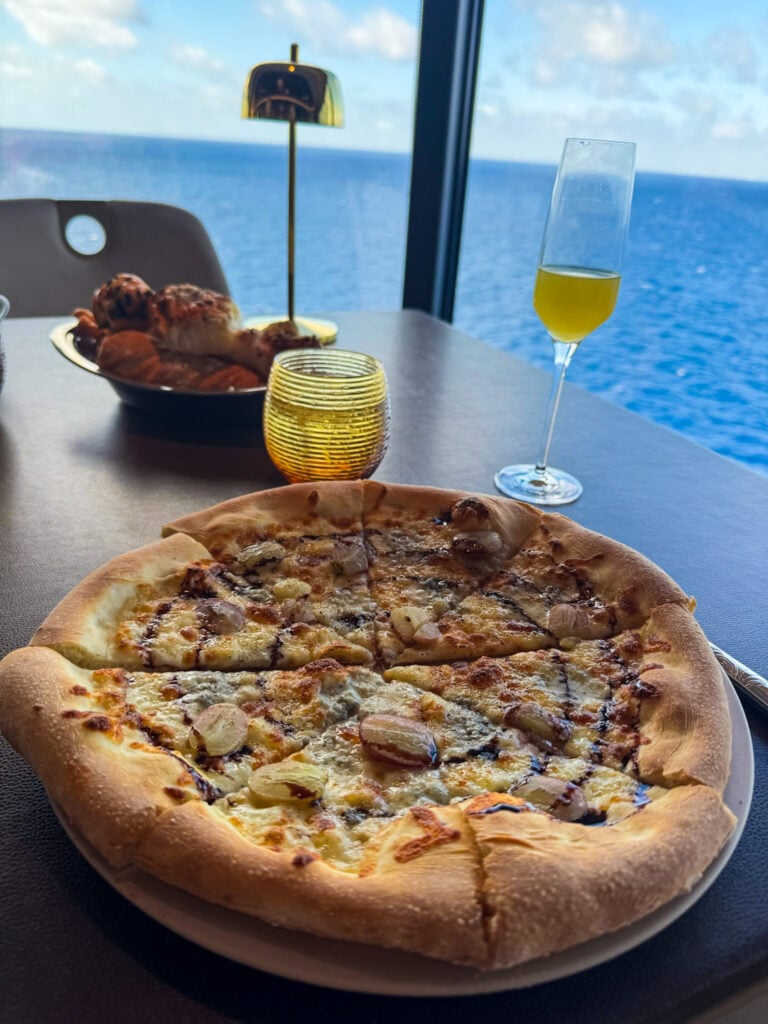
Palo brunch reservations are already a source of frustration.
Even with Pearl booking access, securing a table can feel like an achievement rather than a straightforward opportunity to enjoy a loyalty benefit.
That does not make this change less objectionable. It makes the whole situation more frustrating.
The difficulty of using a benefit is a reason to improve access—not a reason to remove it.
I do not expect Disney to create unlimited brunch capacity. There are only so many tables and service hours.
But when guests already struggle to secure a reservation, restricting how they can use their dining credit feels particularly unnecessary.
The message I take from this is not that Disney wants to make its loyalty program better.
It is that guests now have one less way to enjoy it.
Dinner Is Not a Replacement for Brunch
Keeping the dinner credit does not resolve this.
Palo brunch and Palo dinner are different experiences.
Guests have perfectly reasonable reasons for preferring one over the other.
Some do not want to miss an evening in the rotational dining restaurants. Some enjoy having dinner with their children but would welcome a quieter brunch. Others simply prefer the brunch menu.
They should not have to justify that preference.
A credit restricted to dinner is worth less to someone who wants brunch—even if the dollar amount remains unchanged.
That is what gets lost when the reassurance is simply that members are “keeping their $55 credit.”
They are keeping the amount. They are losing flexibility.
For guests who used it at brunch, and don’t want to do Palo dinner the benefit is now zero. They have had the choice removed.

The Dinner Change Adds Another Layer of Frustration
Removing the prix-fixe dinner menu also matters.
Previously, the $55 credit matched the price of the four-course set dinner. Eligible guests could select that menu knowing their food was covered.
With an entirely à la carte menu, the experience changes.
Guests will need to add up their selections and decide whether to stay within the allowance or spend more.
Without the final menus and prices, I cannot say that everyone will pay extra. Some guests may comfortably stay within $55.
But a covered set dinner and a contribution toward an individually priced meal are not quite the same thing.
Disney could preserve a defined meal for eligible members or ensure the credit covers a comparable selection of courses.
Instead, we have the removal of the prix-fixe option alongside a dinner-only restriction on the loyalty credit.
Neither makes Castaway Club feel more rewarding.
And really, let’s see how long they wait to raise the prices on Palo dinner. So the $55 credit will become even less “value”.
Castaway Club Was Already Too Limited
I have already written about this in my comparison of Disney’s Castaway Club and Royal Caribbean’s Crown & Anchor Society.
Disney asks guests to complete 10 cruises to reach Platinum and 25 to reach Pearl.
Those are substantial milestones.
Yet the program’s practical benefits are relatively modest, particularly when compared with programs offering daily drinks, internet allowances and laundry benefits at higher tiers.
Disney also counts completed cruises rather than nights sailed. Ten three-night cruises and ten seven-night cruises lead to the same status, despite representing very different amounts of time onboard.
I have long thought that deserves reconsideration.
But instead of seeing a more generous program, we are discussing another restriction.
To be accurate, early booking is not literally the only benefit remaining.
Stateroom gifts, selected discounts, the Palo dinner credit and Pearl’s unlimited digital photo package still have value.
But early booking increasingly feels like the main reason to care about status.
And that is an uncomfortable position for a loyalty program: one of the biggest rewards for spending money with Disney is getting an earlier opportunity to spend more.
This Follows My Disappointment With Disney Believe
This announcement also comes after a reveal that left me questioning how much new value Disney is offering returning guests.
In my Disney Believe reveal article, I explained why I was underwhelmed.

Encanto genuinely excites me. But familiar itineraries, returning restaurants and another Frozen-themed dining experience did not give me enough reasons to rush to book.
Repeating themes is not proof of cost-cutting. Disney has not established that cost savings are the reason for those creative decisions, and I cannot claim to know its internal thinking.
But I can explain how it feels as a customer.
Familiar experiences on a new ship, combined with tighter restrictions on loyalty benefits, create the impression that Disney expects continued enthusiasm without having to offer enough in return.
Taken individually, each decision may have a business explanation.
Taken together, they leave me increasingly frustrated.
The Financial Results Make This Harder to Accept
The financial backdrop does not help.
In my review of Disney Cruise Line’s financial filings, I highlighted approximately:
- $3.01 billion in FY2025 revenue, up from $2.50 billion in FY2024.
- $302.7 million in reported profit.
- More than $1 billion in deposits for future sailings, as of September 27, 2025.
Those figures come from Magical Cruise Company, Limited’s UK filings and do not represent the entirety of Disney Cruise Line’s business.
There is also important context: profit declined from the previous year, and fleet expansion brings substantial costs. Growing revenue does not mean every additional dollar is profit.
But understanding that does not oblige guests to accept less.
A profitable, expanding business should be able to recognize the value of preserving goodwill among its most loyal customers.
I am not claiming these figures prove why Disney made the Palo decision.
They do, however, make it harder for me to accept that restricting a modest dining benefit is the right priority.
Disney Should Be Improving This Benefit
There is a much better direction Disney could take.
Allow eligible members to apply their Palo credit to either brunch or dinner, subject to reservation availability.
Preserve a complete dinner option covered by the benefit.
Look at ways to make loyalty benefits easier to enjoy rather than more restrictive.
And consider adding practical rewards that guests can use without first having to win the reservation lottery.
None of this requires unlimited complimentary dining or extravagant giveaways.
It requires treating loyalty as something worth continuing to earn.
The Point Is Not Just Paying for Brunch
I am not suggesting anyone completes 25 Disney cruises solely to receive a Palo benefit.
But after that level of loyalty, discovering that an already difficult-to-access perk is becoming more restricted feels dismissive.
The objection is not simply, “Now I have to pay for brunch.”
It is that Disney is taking something away without offering anything additional in return.
A benefit does not become worthless because it is difficult to secure. Removing it does not become acceptable because some guests rarely managed to use it.
I can love Disney Cruise Line, appreciate its crew and treasure my experiences onboard while still finding this decision unacceptable.
Disney should not mistake repeat bookings for unconditional approval.
Its most loyal guests deserve a better response than reassurance that the benefit has not been taken away completely.
Alison Meacham is the founder of EverythingMouse Disney Blog. For over 15 years she has shared her love of Disney Parks, Disney Cruises and Universal Orlando. In over 30 years of Disney Travel she has spent countless months in Disney Parks and has sailed on over 60 cruises. A British native and now a United States resident she splits her time between California, Florida and the UK. And spends a serious amount of time sailing the seven seas. She helps over 250,000 people per month follow their Disney travel dreams.